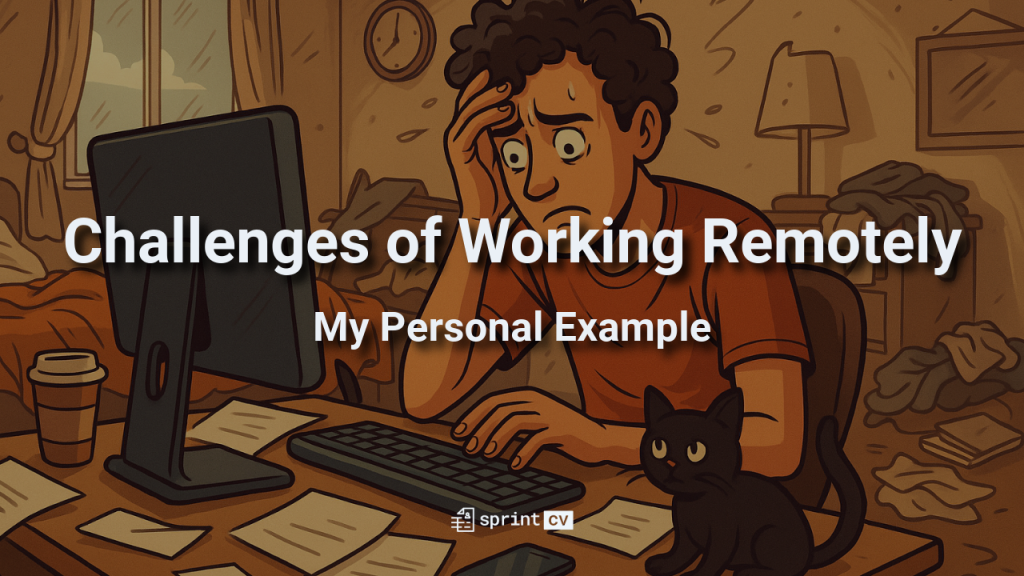

When I first got the opportunity to work remotely for two weeks, I was genuinely thrilled. The idea of starting the day without rushing to catch a bus or squeezing into a crowded metro felt liberating. I imagined peaceful mornings with a steaming cup of coffee, quiet afternoons filled with deep focus, and evenings that stretched endlessly without the stress of commuting back home. But then, the many challenges of working remotely hit my in the face. Instead of the productivity paradise I had envisioned, I found myself navigating a maze of distractions, lack of structure, and an unexpected sense of isolation. The difficulties became very real, very fast.
The Room That Became My Office (and My Prison)
In the beginning, I decided to work from my bedroom. It felt logical: quiet, private, and familiar. My desk was there, my chair was comfortable, and I had everything I needed.
But what I didn’t anticipate was how quickly that space would lose its sense of comfort. Within days, the room that once represented relaxation started to feel like an extension of my job. My laptop stayed on the desk, the glow of the screen a constant reminder of work waiting to be done.
I’d wake up and see messages and tasks already staring back at me. I’d go to bed with notifications still blinking. My bedroom had turned into a 24-hour workspace, and my boundaries began to crumble.
Adding to that, my cat seemed to develop an uncanny ability to interrupt at the exact wrong moments. Every video editing session became a stage for his meows, every quiet moment an invitation for him to demand attention (or food). It was adorable, yes, but also a steady rhythm of distraction.
It was in those moments I realized how easily your environment shapes your mindset. The bedroom wasn’t just my office; it was becoming a trap for distraction and blurred boundaries.
The Illusion of Freedom and the Reality of Chaos
One of the most seductive things about remote work is the promise of freedom. No office noise; no fixed hours; no one watching over your shoulder. You can design your perfect day (or so it seems). But freedom without structure quickly turns into chaos.
During those first few days, I discovered how fragile time can be when there’s no external rhythm to guide it. Without meetings in person or the buzz of colleagues nearby, my sense of urgency began to fade. Hours passed without progress. My to-do list grew instead of shrinking.
At first, I blamed external distractions. But soon I realized it wasn’t just about my environment: it was about accountability. When no one’s around to see what you’re doing, it’s easy to lose momentum. Remote work requires a level of self-discipline that few of us are taught to develop.
That’s one of the hardest challenges of working remotely: the invisible slide into unstructured days that quietly steal your productivity.
The Myth of Multitasking at Home – One of the Biggest Challenges of Working Remotely
Another trap I fell into was the myth of multitasking. At home, you think you can blend work and life seamlessly. Maybe you’ll answer a few messages while cooking lunch, or review a blogpost while folding laundry. It sounds efficient, but it’s not.
In reality, multitasking fragments your attention. Each time you switch from a task to something else, you lose focus. It takes minutes to regain it, and by the end of the day, you’ve spent more energy jumping between activities than actually completing them.
When I finally tracked my time one day, I was shocked. My eight-hour workday had only about four hours of true focus. The rest was scattered between minor distractions and micro-breaks that added up without me noticing.
Working from home doesn’t automatically make you productive: it forces you to create the conditions for productivity. And that means guarding your focus like it’s your most precious resource.
The Emotional Side of Remote Work
Remote work isn’t just a logistical shift; it’s an emotional one.
In an office, small moments of connection – greeting someone in the morning, chatting over coffee, brainstorming in person- create a rhythm that grounds you. When you work remotely, that rhythm disappears. The silence, once peaceful, begins to feel isolating.
There were days when I didn’t speak to anyone in person for hours. The only voices were from meetings or the occasional WhatsApp notification. That sense of isolation slowly started to affect my motivation. Without the social cues of an office, even the simplest tasks began to feel heavier.
This emotional distance is one of the most underestimated challenges of working remotely. It doesn’t happen all at once, it builds quietly. You begin to feel disconnected from your team, from your company’s energy, and even from your own sense of progress.
That’s when I realized remote work isn’t just about managing time; it’s about managing emotion. You have to deliberately create connection, even when it doesn’t come naturally.
Lessons Learned: Rebuilding Structure from the Inside Out
By the start of the second week, I realized I couldn’t keep working the same way. My days had become unpredictable and unstructured, and motivation alone wasn’t enough to fix it. If I ever work remotely again, I know exactly what I would do differently.
Here are the changes I’d make next time:
- Create a clear workspace. Working from the bedroom blurred all my boundaries. Next time, I’d set up a specific corner or table just for work: somewhere I can associate only with focus. That physical separation would help my brain switch between “work mode” and “home mode” more easily.
- Build a daily schedule. I’d give my day a defined start and finish (something like 9 a.m. to 6 p.m.) and treat it as non-negotiable. I’d also plan short breaks to stretch, grab water, or go outside. A structured day would keep me accountable and prevent time from slipping away unnoticed.
- Plan tasks the night before. Instead of opening my laptop and deciding what to do on the spot, I’d prepare a short list of priorities at the end of the work day. That simple act of planning would make mornings smoother and help me start with direction instead of hesitation.
- Create rituals to mark beginnings and endings. I’d like to have small signals to start and close the workday – like making coffee and sitting down at the same time each morning, and then physically shutting down the laptop at the end. Those rituals could give shape to time and keep the day from blending into one endless stretch of “almost working.”
- Stay connected on purpose. Remote work can feel isolating, so I’d make it a point to check in with teammates at Sprint CV more regularly – through short calls, quick chats, or even casual conversations that aren’t about work. Staying socially connected helps motivation stay alive.
Looking back, I understand that structure isn’t just about calendars and checklists: it’s about protecting your focus, your time, and your energy. If I ever go through another period of remote work, I’ll be ready to build the right systems from the start.

The Hidden Benefit: Self-Awareness
Despite the challenges, those two weeks of remote work turned into an invaluable learning experience. They forced me to face my habits, question my assumptions, and understand how I actually function best.
I learned that productivity isn’t about hours worked – it’s about energy managed. It’s about recognizing when you’re most focused, when you need rest, and what kind of environment supports your best work.
Working remotely became a mirror that reflected my patterns back at me. Without the external structure of an office, I had to build my own. And that process made me more self-aware, more organized, and ultimately, more resilient.
Why Talking About the Challenges of Working Remotely Matters
We often see remote work portrayed as the ultimate dream: beaches, freedom, flexibility. But few people talk about the silent struggles behind those beautiful setups. The truth is, remote work isn’t inherently easy or hard, but rather a skill that needs to be learned. It demands boundaries, awareness, and systems that protect both your time and mental well-being.
When we share honest stories about the challenges of working remotely, we make it easier for others to navigate them too. We create space for better conversations about burnout, loneliness, and balance. Because the future of work is flexible, but it must also be human.
Final Thoughts on My Challenges of Working Remotely
Working remotely taught me that productivity and freedom don’t naturally go hand in hand. They need structure, discipline, and intention. I learned that your environment matters more than you think. That breaks aren’t a luxury: they’re a necessity. And that staying connected, even through a screen, keeps you grounded.
If you’re struggling with remote work, know that it’s normal. It takes time to find your rhythm. Start by defining your workspace, setting clear boundaries, and giving yourself permission to experiment. The challenges of working remotely are real, but so are the rewards. When you learn to master them, you don’t just become a better worker. You become a better version of yourself: more aware, balanced, and intentional in everything you do.
And maybe that’s the ultimate success of remote work… Not escaping the office, but learning how to truly work well, wherever you are.
Cloud Software
Berita Olahraga
Lowongan Kerja
Berita Terkini
Berita Terbaru
Berita Teknologi
Seputar Teknologi
Berita Politik
Resep Masakan
Pendidikan


