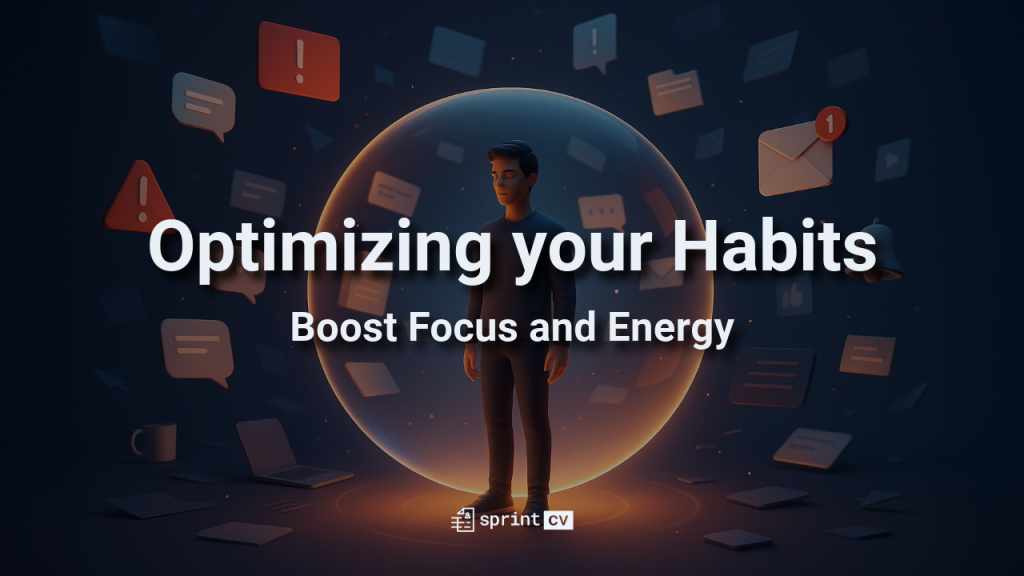

Everyone dreams of achieving more and performing better every single day. The idea of constant improvement is exciting, but the real question is, how does one actually make that happen? The answer is not as complicated as it may seem. It starts with optimizing your habits and build routines that support your growth. It is about designing a life that boosts your energy, enhances your focus, and allows you to perform at your best without feeling drained.
This week, for instance, was a tough one for me. The routine felt repetitive, and as each day passed, my motivation began to dip. When tasks start to feel monotonous, it becomes harder for the brain to stay engaged. At some point, I had to push myself to keep going just to avoid procrastination. That moment is where many people fall into a trap of exhaustion or distraction. However, it is also where you can consciously intervene and reset your mind. You can train your brain to shift its chemistry toward motivation and energy again.
Most people know that taking regular breaks helps. Stepping away from your desk for a few minutes or going outside for fresh air can do wonders for your mood. But there is much more you can do beyond the usual advice. The key lies in creating an environment and a mindset that work with you, not against you.
Set Clear Goals and Realistic Expectations to Optimize your Habits
One of the most powerful ways to maintain focus and avoid burnout is by setting clear goals. The problem with many to-do lists is that they are simply too long. When you face an overwhelming list, you set yourself up for frustration and guilt. Instead, set a reasonable number of tasks that you can actually complete in a day. Choose a few that matter most and commit to doing them well.
You can also divide your day into clear segments. Write down which tasks you will handle in the morning when your energy levels are typically higher and which ones you can leave for the afternoon. This structure allows your brain to work efficiently without going into overdrive. The aim is not to multitask or rush through everything. It is about creating balance and allowing mental space between different types of work.
Limit Distractions and Protect Your Focus
Focus is one of the most valuable skills in any career. Yet, it is also the one we lose the easiest in a world full of constant notifications, meetings, and messages. To protect your focus, minimize the number of meetings you attend. If a meeting can be replaced with an email, make that suggestion. Meetings often break the rhythm of productive work, leaving you feeling scattered afterward.
Another simple but effective step is to silence your phone. Notifications from social media, messages, or apps can pull your attention away from what really matters. Even brief interruptions can cost you significant mental energy as your brain tries to refocus afterward. By putting your phone on silent or keeping it away during deep work sessions, you are protecting one of your greatest assets: your attention.
Optimizing your Habits Through Workspace Decluttering
The state of your environment directly influences the state of your mind. A cluttered workspace can create mental chaos without you even realizing it. When there are too many items in your field of vision, your brain subconsciously processes each one, dividing your attention.
Decluttering your workspace is one of the easiest and fastest ways to regain control over your focus. Keep only what you truly need around you. Make your desk a place that invites clarity rather than distraction. Even small changes, like organizing cables, putting papers in order, or removing unnecessary objects, can instantly shift your mental state.
Automate Repetitive Tasks
Repetition can be mentally exhausting. If you find yourself doing the same small tasks over and over again, consider how you can automate them. It might take a bit of effort now, but it will save you hours and mental energy in the future.
Automation does not have to be complicated. It can be as simple as setting reminders, using templates for routine messages, or creating workflows that eliminate redundant steps. By reducing repetitive tasks, you free up mental bandwidth to focus on creative thinking, problem-solving, and strategy.
Think of automation as an investment in your future efficiency. Every small process you streamline today will help you perform better tomorrow.
Understand the Connection Between Focus and Career Growth
You may be wondering how these small changes can impact your career in the long run. The truth is, people who know how to focus are the ones who stand out. Focused professionals consistently produce higher-quality work. They make better decisions, communicate more effectively, and manage their time wisely.
When you set achievable goals, organize your environment, and take care of your mental energy, you are setting the foundation for long-term success. Productivity is not about doing more. It is about doing better. You can work fewer hours and still outperform someone who spends twice as much time distracted and unfocused.
Build Consistency the Same Way You Would Build Strength
Improving your focus is similar to training your body. Imagine you are working out. If you manage to train two times this week instead of four, it is still progress. You did not skip it altogether, and that matters. The same goes for work habits. Small, consistent improvements will always beat bursts of intense effort followed by exhaustion.
You do not need to accomplish everything at once. Even 30 minutes of focused work each day can be more effective than several hours of distracted effort. Progress compounds. The more you train your focus, the easier it becomes to sustain it.
It is also important to recognize that doing more does not always mean doing better. Sometimes, the best thing you can do for your productivity is to slow down, reassess, and realign your energy with what truly matters.
Optimizing your Habits by Working Smarter, Not Harder
You have probably heard this phrase countless times, but it remains true: working smarter always beats working harder. Working smarter means understanding your limits and respecting your energy levels. It means creating systems that make your work easier and more sustainable.
When you structure your day intelligently and give your body and mind what they need, you can end your workday feeling as light and clear as when you started. You can deliver great results without overworking yourself. That balance is what separates long-term achievers from those who burn out quickly.
Working smarter also involves recognizing patterns that drain you and replacing them with ones that energize you. For instance, if you know that you lose focus after lunch, plan lighter tasks for that period. If you work best in silence, find a quiet space or use noise-canceling tools. The more aware you are of your rhythms, the more control you have over your output.

The Power of Rest and Recovery on Habit Optimization
Another essential piece of the productivity puzzle is rest. High performance is not about working without breaks. It is about managing your energy strategically. Just like athletes need recovery to build strength, your brain needs downtime to process information, make connections, and restore motivation.
Rest does not always mean doing nothing. It can be a walk, a coffee break, a conversation with a colleague, or even a short meditation. What matters is that you step away from intense mental effort for a while. When you return, you will notice an immediate boost in clarity and creativity.
Rest also reinforces discipline. When you respect your limits and allow time for recovery, you are teaching yourself that productivity is not a punishment. It is a partnership between your mind, your body, and your goals.

Optimizing your Habits by Embracing Progress Over Perfection
The pursuit of perfection is one of the biggest productivity traps. Many professionals push themselves relentlessly trying to achieve flawless results, only to end up frustrated and exhausted. Progress, not perfection, should be your focus.
Every small improvement counts. Completing a task well, even if it is not perfect, is better than waiting for the perfect moment or overanalyzing every detail. Over time, these consistent actions build momentum, confidence, and a solid reputation for reliability.
The Mindset of Continuous Growth
Building better habits, routines, and systems is not a one-time effort. It is a continuous journey. The goal is to keep evolving, learning, and adapting. As your responsibilities grow, so should your strategies for managing them.
Success does not come from working nonstop. It comes from understanding how to align your actions with your energy and your purpose. When you master that balance, you are not just productive; you are fulfilled.
Final Thoughts on Optimizing your Habits
At the end of the day, success is not about how many hours you put in but about how wisely you use them. By optimizing your habits, setting clear goals, minimizing distractions, and respecting your need for rest, you create a work life that supports growth rather than drains it. Focus is not a gift reserved for a few. It is a skill that anyone can develop with patience and consistency. When you work smarter, you do not just achieve more. You build a life that allows you to grow, contribute, and still have the energy to enjoy it.
Harnessing the power of AI, Sprint CV helps you streamline your recruitment process by automating routine tasks and optimizing your habits. Book a demo with us and see the difference for yourself!
Cloud Software
Berita Olahraga
Lowongan Kerja
Berita Terkini
Berita Terbaru
Berita Teknologi
Seputar Teknologi
Berita Politik
Resep Masakan
Pendidikan


