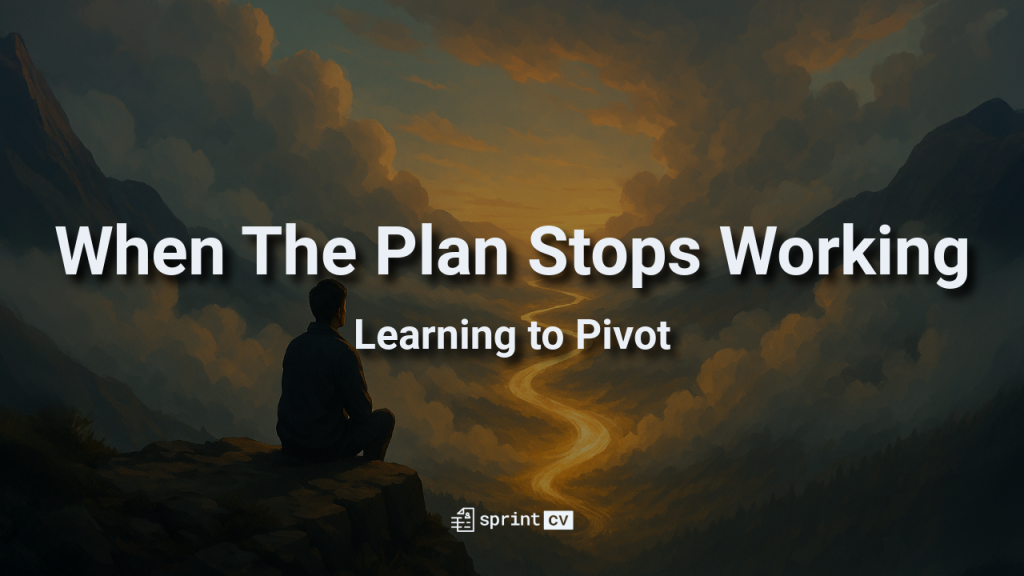

It is gut wrenching when the plan stops working and you realize that a project a task or even an entire company is not unfolding in the way you hoped. The feeling can be compared to that moment when your computer crashes and you discover that the document you were working on did not save. Suddenly there is a wave of numbness. Your body feels suspended as if you have been forced to pause in the middle of motion. You sit there thinking about all the time invested all the energy poured and all the hope that was placed in that direction. That sinking sensation is real and powerful and it can make you question everything you have been building and working toward. Yet that moment of stillness where everything feels uncertain is sometimes the beginning of a far better plan.
These moments are not failures but rather important checkpoints. Just because something needs to be rewritten does not mean the original idea was not good or meaningful. Taking time to evaluate progress is just as important as the initial spark of motivation that set everything in motion. Many people fear stopping halfway because it can feel like admitting defeat. However pausing is an act of strategy not surrender. Stopping to analyze how things are developing allows for clarity and direction. It may feel uncomfortable but it is one of the most valuable things you can do when working on something that matters.
The Emotional Fear Behind Adjusting When The Plan Stops Working
There is a strong psychological connection to why adjusting a plan feels uncomfortable. Humans often fear the possibility that things might not work out. When fear takes over people have a tendency to sabotage their own efforts. Instead of exploring alternatives we sometimes place all movement on hold because doing nothing feels safer than risking continued effort that may not lead to quick results. But improvement is born through revision. Growth often requires returning to the original drawing board and acknowledging what needs to change.
Many successful companies have had to reshape their plans mid process. Some of the greatest innovations were not created in a straight line but through cycles of testing failure refinement and perseverance. In the world of Formula 1 for example no great car is designed perfectly in its first draft. The process involves sketching building discarding adjusting and testing repeatedly. Every version is an opportunity for improvement. Every adjustment brings the project closer to excellence. It is not the first idea that wins. It is the idea that adapts intelligently and consistently through time.
Stepping Back Is Not Giving Up
Emotionally it can be discouraging to watch something you worked on so intensely be set aside. Yet even professional sports teams take time to regroup. Coaches analyze mistakes players re strategize and the team shifts direction based on new insight. This regrouping process is essential. It is not stepping backward. It is recalibrating with purpose. The same approach applies to creative work business development and personal goals.
No company thrives without a supportive team. Collaboration requires trust communication and shared responsibility. When people support one another progress is far more sustainable. Rome was not built in a day and neither are meaningful achievements. The projects and dreams that hold true value do not appear through brief bursts of effort. They require persistence reflection and adaptability. They require the patience to try predict revise and rebuild. Strength comes from showing up consistently not from expecting immediate perfection.
A powerful example is the creation of the first Avatar movie. Director James Cameron spent fifteen years developing the film because he needed technology to match his artistic vision. Instead of rushing he waited he expanded he refined. He allowed the idea to evolve. The success of the film reflects the value of patience commitment and clarity of vision. It demonstrates that sometimes the world must catch up to your idea rather than the other way around.
Letting Creativity Breathe When The Plan Stops Working
Great work is not produced by urgency but by intention. When pressure is removed creativity has the space to breathe. Stepping back does not delay success it strengthens it. Re evaluating a project brings new life to it. It encourages different perspectives and introduces new possibilities. Sometimes showing your work to someone else hearing a fresh interpretation or receiving constructive feedback opens a direction you would not have seen alone.
The mind is capable of extraordinary insight when given time to reassess. Returning to an idea later often reveals details that were invisible before. Distance provides clarity. Reflection builds resilience. When you allow yourself to pause observe and then move forward again you are honoring both your ambition and your well being.
Reflection as an Active Practice
Reflection is not a passive act. It is an active deliberate engagement with your own thoughts and experiences. When you reflect you assess what has worked and what has not and you explore ways to refine your approach. Reflection is the blueprint of improvement. By pausing to think deeply about your direction you ensure that your effort continues to align with your goals rather than drifting off course without awareness.
There is a cultural expectation that progress must always be fast that success is measured by how quickly something is accomplished. However speed is not the most important measure of success. Sustainability is. When progress is achieved slowly with care and understanding it has a stronger foundation. Work built with intention does not crumble at the first sign of challenge. Instead it adapts.
Creativity and innovation thrive on the willingness to try again. They require comfort with the unknown and a trust that exploration will eventually lead somewhere valuable even if the path is not obvious from the start. When something does not work the first time it does not mean it will never work. It simply means that more time or a different angle is needed. The willingness to return to a work in progress is a sign of dedication not failure.
Every meaningful achievement contains moments of frustration and doubt. These moments are not signs that you should stop. They are signals that growth is occurring. Growth often happens at the edge of your comfort zone where things feel uncertain. Learning how to stay present in these moments is part of developing the resilience required to achieve long term goals.
When plans shift it can be helpful to discuss them with others. Sharing your thoughts can reveal perspectives you had not considered. Different opinions and insights can clarify direction. Collaboration can spark renewed motivation. You do not need to carry the entire weight of a project alone. Support from others can lighten the emotional load and provide encouragement to keep moving.
A Journey of Patience and Renewal
It is also important to celebrate small progress. Even when the plan stops working and adjustments are needed there are always aspects of the journey that reflect dedication and effort. Acknowledging small steps reinforces momentum and reminds you that progress is happening even if it does not look exactly as you first imagined.
Taking a step back to refine a project is an act of responsibility. It shows that you care about the quality of your work. It shows that you value the outcome enough to invest additional time energy and thought. This mindset transforms setbacks into stepping stones. When challenges are approached with openness and curiosity they become opportunities for deeper insight and improvement.
The ability to adapt is one of the greatest strengths any individual or team can have. Plans change because circumstances change. The world evolves technology advances strategies shift and new information becomes available. Flexibility allows your work to remain relevant and strong. Rigidity creates unnecessary struggle while adaptability invites growth.
It is also helpful to remember that taking your time does not make your dream any less real. It does not reduce its significance or its potential. Dreams are not defined by how quickly they are achieved but by how deeply they are pursued. When you commit to a vision and allow it to evolve with you the outcome becomes richer and more meaningful.
In the end the process of revisiting reworking and improving is not a detour. It is the path itself; it is where skill develops clarity sharpens and confidence grows; it is where you learn how to trust yourself your abilities and the direction you are moving toward. The most important lesson is to remain patient with yourself. Allow your work to unfold at its natural pace. Give yourself room to breathe reflect adjust and continue.
Conclusion
Every revision brings you closer to the version of your project that aligns with your deepest intentions. When the final result does arrive you will know that it was not rushed not forced and not compromised. It will be the result of persistence care patience and an honest willingness to grow along the way. So when the plan stops working, you know that it’s not the end of the world…
Did you know there’s a great way to free up your time and create better plans by automating most of your recruiting process? Book a demo with us and let us show you how.
Cloud Software
Berita Olahraga
Lowongan Kerja
Berita Terkini
Berita Terbaru
Berita Teknologi
Seputar Teknologi
Berita Politik
Resep Masakan
Pendidikan


